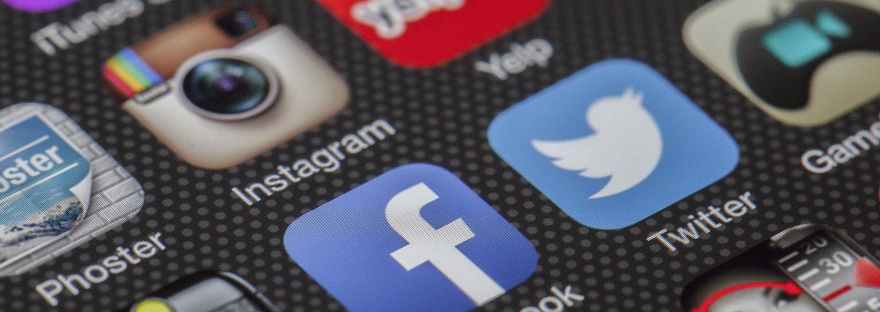
We live in the age of technology. It runs our businesses, our recreation, our cars…and our lives. We spend the majority of our time on our phones or computers…and the majority of that time is spent on social media; whether it is scrolling through our feed, catching up on the latest updates and photos from our friends or the people we follow, shopping for neat DIY ideas, sharing our latest adventures or meal with our peers…or, for some, working our jobs.
Whatever it is we do, admit it, we spend A LOT of our time on social media. It’s nice to be able to stay connected with family and friends who live all over the world, have lots of ideas and information at our fingertips… but with all the fun and games comes, of course, an ugly side to social media.
With a wealth of knowledge at our fingertips, and just about everything you ever wanted to know (and more) about any subject only a click away…and SO MANY different opinions and beliefs everywhere we turn… we can also run into a censorship issue. Whether it comes from the social media platforms themselves, or from our peers, there seems to be a constant attempt to silence those who have different beliefs, or anything that doesn’t fit their ideas or end goal.
So what do we do about it? And do the social media platforms have to right to silence the words they do not like?
Application from History
Freedom of information means freedom for the people… which also means a lack of control over the people. To make decisions for them and to deceive them. Even before the age of the internet, censoring in the media was still a thing.
In 213 B.C., Chinese emperor Qin Shi Huang ordered a bonfire of books as a way of consolidating power in his new empire. According to historian Lois Mai Chan, “His basic objective was not so much to wipe out these schools of thought completely as to place them under governmental control.” Books of poetry, philosophy and history were specifically targeted, and anyone found in possession of these types of books were punished severely. Although the exact amount of information lost is unknown, it is suspected that the history genre suffered the greatest loss.
Then came the beginning of the printing press and ushered in the Enlightenment Era. People began to see knowledge as a way to change themselves and the world. This made it a far more dangerous commodity, no longer controlled exclusively by the elite. What better way to reshape the balance of power and send a message at the same time than by burning books that encouraged and gaining knowledge?
Tens of thousands of books were burned within months of the Nazis’ seizure of power in Germany: including works by Helen Keller, American novelists Ernest Hemingway and Jack London, and scores of Jewish writers.
Book burnings turned into internet censorship, where the platforms limit what their users can say. This creates a bit of a dilemma and is in a legal gray area. Obviously social media firms have a legal right to restrict content on their sites and consumers have the right to avoid their services and go to other platforms if they don’t like a social network’s censorship practices. No one is forced to use the platform if they don’t like it – but the lack of available alternatives means that social media has a monopoly over information sharing today. Platforms like Facebook, Instagram, Twitter, and YouTube dominate the industry, so there are not too many other places to go.
Conclusion
Technology has changed the way we share and save information, but the core motivations for censorship, in whatever form it takes, remain the same: prioritizing one type of information over another.
In our search through the internet or books we should always be seeking truth…no matter how unpleasant it may be for us, or how much it may contradict our previously conceived thoughts and beliefs.
Legally, we all have a right to restrict certain content in our own areas, but the danger with censorship becomes the tight reign on freedom of thought and not allowing the people to search out the truth for themselves.
I believe content restriction on sites should not be on anything that the owners do not agree with, or isn’t politically correct, but should be limited to content that is illegal, harmful to others (such as hateful speech and threats), and content that specifically goes against standards, or statements of faith in some cases. And I am not talking about Facebook community standards that change all the time to fit the mainstream narrative, or are so vague the public doesn’t even know what the standards are. No, it needs to be clearly stated and defined ahead of time and available for people to view and understand. Different viewpoints and opinions should be allowed and conversation encouraged. That is how we learn.
I talk more about how to balance freedom and censorship in my previous article: Censorship in Journalism.
The bottom line is this:
Let us dare to read, think, speak and write.
John Adams

 chelseabarlow.com