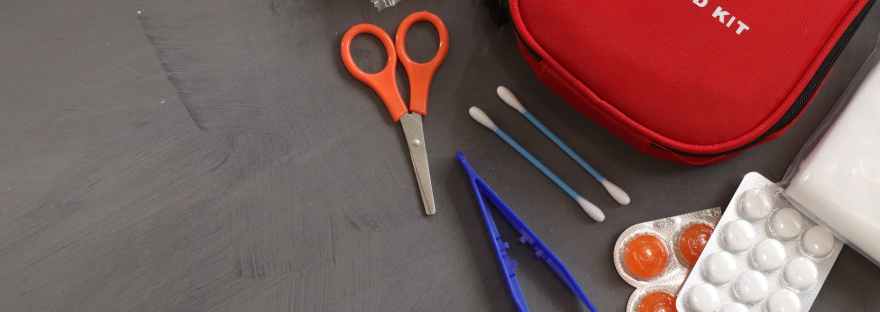
Whether you are a mom of kiddos who love to get into all kinds of scrapes, you like to go on adventures, or you just want to be prepared for anything, a first aid kit is a MUST.
The neat thing about a first aid kit is how versatile you can make it. Based on your specific needs, where you are adventuring or what you are expecting to do, you can adjust what is in your kit to fit what you need. You can also choose to go the conventional route, or pack some more holistic supplies.
While there are a lot of options out there, and many different lists, here are some of my go-to kit must haves:
1. Essential Oils
–Frankincense – This king of oils is just a good all-around oil to have on hand for many uses: bugs, heated muscles, soothing skin or scars. It is slightly expensive, but a little goes a long way and it will last you a while if you are careful.
–Helichrysum – Helichrysum is a great immune booster, it can help ease some digestion issues and skin irritations. Mixed with lavender and a carrier oil, such as coconut oil, it can help ease itchiness.
–Lavender – This is another all-around good oil to have on hand. It is very skin soothing after bug attacks, small burns or itchiness.
–Peppermint – An ease for tummy troubles, muscles, annoying mouth bumps and pesky bugs…or even a cooling agent when you are too hot…peppermint is a must have for your first aid kit.
–Tea Tree – This oil is another favorite for pesky bugs, both before and after they attack.
2. Spices
Sometimes you don’t even need to leave your home to find supplies for your kit. Many of the ingredients in your kitchen are jam-packed with health benefits! There are many spices and each one contains so many benefits, but we will just cover the highlights:
–Cayenne – Cayenne pepper is full of beta carotene and antioxidants that support the immune system. It aids in breaking up and moving congested mucus and diminishing colds. It also raises your body temperature, which makes you sweat and increases the activity of your immune system AND contains a good amount of vitamin c for an extra punch of protection.
When applied to the skin, cayenne pepper can actually help relieve certain discomfort. It reduces the amount of substance P, a chemical that carries pain messages to the brain. When there is less substance P, the pain messages no longer reach the brain and you feel relief.
–Cinnamon – Cinnamon is one of the oldest spices in the world and has long been used for its health properties in many forms of holistic and traditional medicine. It contains many antioxidants which help protect against free radical damage. Its natural antimicrobial, antibiotic, antifungal and antiviral properties makes it a strong fighter against infections and viruses. It is also helpful in oral hygiene by fighting against bad breath, tooth decay and mouth infections.
–Garlic – This delicious, yet potent smelling, spice contains antimicrobial, antiviral, and antifungal properties, due largely to certain chemical compounds such as allicin. This makes it highly effective for killing microorganisms responsible for infections like the common cold.
–Ginger – This spice contains many important compounds, vitamins and minerals. Gingerol is a big one, which has potent antioxidant and anti-inflammatory properties. Through history ginger has been used to help ease seasickness and nausea. It is also popular in helping with menstruation cramps in women.
–Oregano – Oregano is a powerhouse of antioxidants! This makes this spice a great help with relieving inflammation. Several of the active compounds found in oregano can help aid digestion by relaxing the muscles of the GI tract and helping balance the ratio of good-to-bad bacteria in the gut.
3. Coconut Oil/Aloe Vera
Both of these are soothing for the skin…especially for dry or sun-kissed skin. Coconut oil is also a great carrier oil when applying certain essential oils topically, or for dry lips.
4. Raw Manuka Honey
Manuka honey is highly antimicrobial and has been shown to increase the body’s immunity. This helps make it a nice soother for sore throats and to help ease mild injuries.
Its acidic nature/low pH, and antioxidant, anti-inflammatory and antimicrobial effects makes it popular for minor wound care. Research shows it can stimulate tissue regeneration, reduce inflammation, and decrease swelling.
5. Arnica 30
A homeopathic remedy. You can use this for any type of blunt trauma to the body, bruising, or falls. Such as bumping heads, a finger getting banged up by a door, etc.
6. Nux Vomica
Another homeopathic remedy that can help with minor tummy troubles, as per its name. 😉
7. Hydrogen Peroxide
Wether your mother used this on you in your own childhood or not, Hydrogen Peroxide is a good natual cleanser for minor cuts and scrapes.
8. Cotton Balls/Swabs
Both cotton balls and cotton swabs come in handy to use with your hydrogen peroxide to help clean cuts and scrapes. You can also use them to help apply essential oils more precisely and avoid accidently getting any in your eyes.
9. Bandaids/Bandages
This really goes without saying, but no first aid kit would be complete without bandages and/or bandaids to help bind and protect those minor cuts and injuries.
10. Lighter
A lighter can be used to sterilize any needles or pins, and it also comes in handy for a fire starter.
You can also check out my Holistic Preppers Kits for more ideas on what I would suggest for emergency preparedness!

 chelseabarlow.com